
The book
Why this book needs to exist
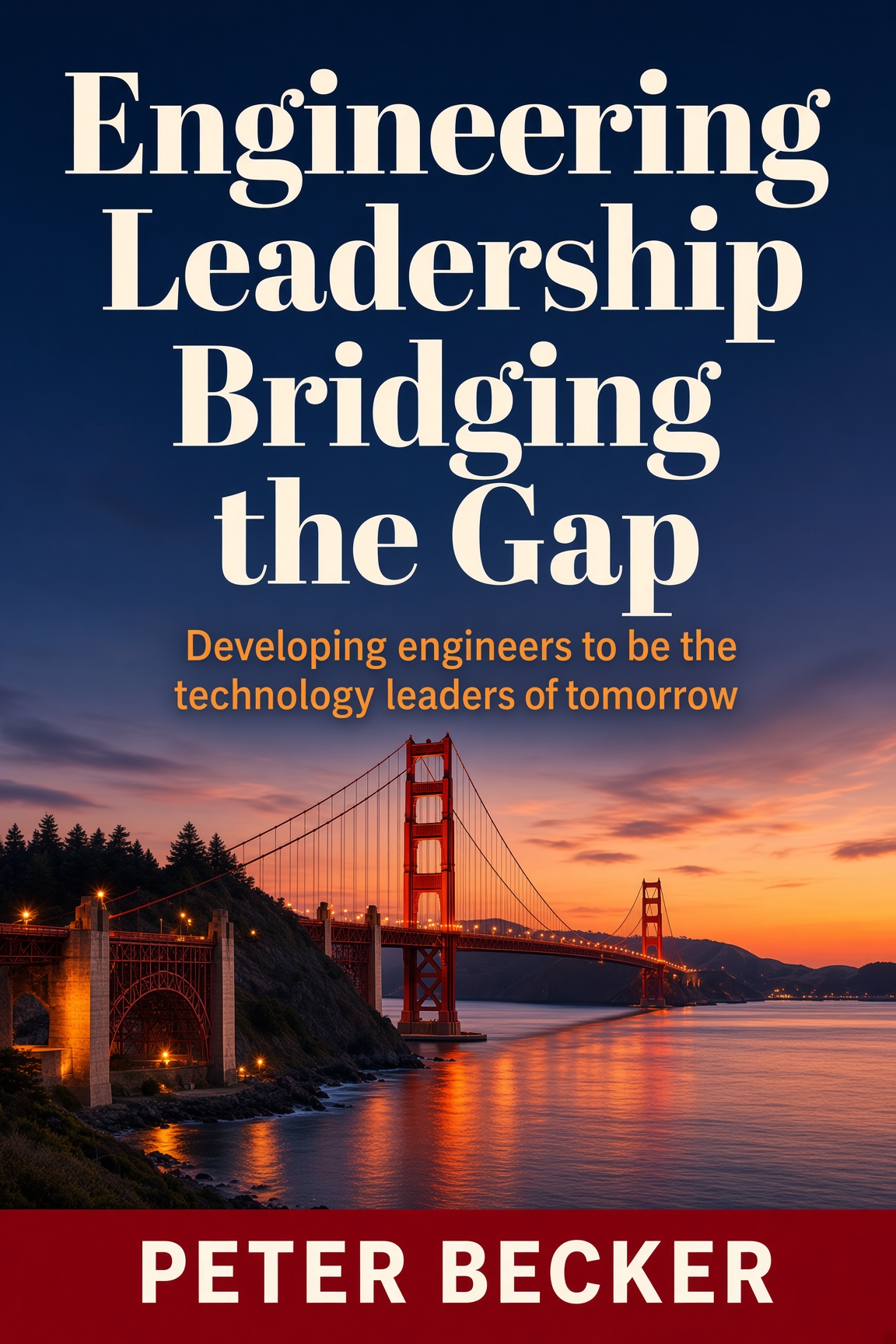
Engineers get hired for engineering skills, fired for a lack of interpersonal skills, and promoted for business and leadership skills. ELBTG is a curriculum for that distance — eleven chapters of communication, mentoring, decisions, teams, and how the work actually runs.
The purpose is simple: develop engineers into the technology leaders of tomorrow — on purpose, through training, mentorship, and experience, not folklore.
Russell and Yao named the gap in 1996. It has not closed. Engineers still leave school fluent in scientific method and mute in stakeholder language, feedback, delegation, and the business implications of a technical call. As the book says: it is not their fault they have not been trained, guided, or mentored to lead.
The philosophy is apprenticeship. When Peter starts mentoring someone, he starts by giving them a leadership book — because a mentor once did that for him. The eleven chapters, the ELBTG model, and the mentoring workbook are that gift, written down.
Dedicated to Chris Williams, a mentor and friend whose guidance illuminated the path.
The impact of giving a book
Giving a leadership book demonstrates a genuine interest in someone’s growth. It offers a focused resource, not a slogan. As the recipient works the pages, the lessons influence decision-making, communication, and problem-solving — a transformative tool that outlasts the exchange.
That is why this site exists beside the book: guides, training, and questionnaires to help engineers develop the soft skills of engineering leadership, just as the last page of the book promises.
What you will learn
- How to name the engineering leadership gap without blaming personality
- How to communicate with non-technical stakeholders
- How to mentor, give feedback, and coach
- How to solve the problem the customer can feel
- How to decide, think critically, and handle conflict
- How to delegate, manage time, and run projects with ELBTG
The ELBTG spine
E
Elevate
Elevate your engineers through training of their soft skills — communication, leadership, adaptability, teamwork, and problem-solving — without diminishing the craft that got them hired.
L
Learn
Learn not only the technical aspects of engineering but the soft skills to lead — questions, listening, problem framing, and critical thinking.
B
Build
Build leaders through mentorships and experiences — goals, listening, tailored plans, tracked progress, and clean feedback.
T
Transform
Transform your engineering team into a team of leaders — teamwork, conflict handled in the open, decisions that do not wait for a hero.
G
Grow
Grow your technology organization through empowering your engineers to lead — time, projects, and a pipeline that is not a spreadsheet.
Chapters at a glance
- Chapter 1 · pp. 1–15Engineering Leadership
- Chapter 2 · pp. 16–26Communication
- Chapter 3 · pp. 27–36Mentoring, Feedback, and Coaching
- Chapter 4 · pp. 37–48Problem Solving
- Chapter 5 · pp. 49–61Decision Making
- Chapter 6 · pp. 62–73Critical Thinking
- Chapter 7 · pp. 74–81Teamwork
- Chapter 8 · pp. 82–90Team Building & Conflict Resolution
- Chapter 9 · pp. 91–97Delegation
- Chapter 10 · pp. 98–106Time Management
- Chapter 11 · pp. 107–129Project Management
129 pages · ISBN 979-8-8585-7469-9 · August 22, 2023